Benefits of learning with animated films
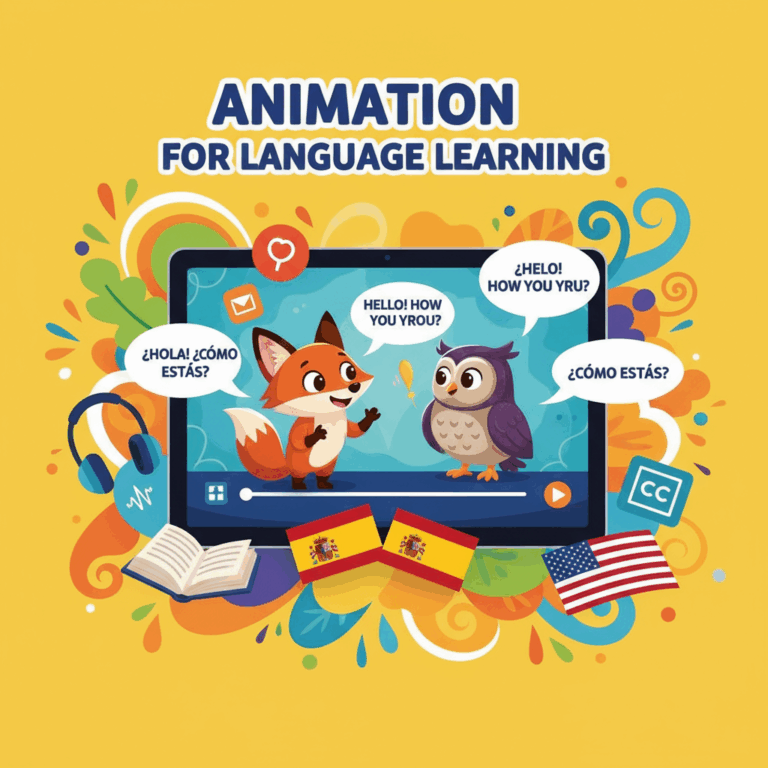
The animated movies they are an effective tool for learning languages, as they combine entertainment with simple language that facilitates understanding.
In addition, they offer a strong visual support that reinforces learning and helps internalize vocabulary and grammar naturally.
Simple language and repetition for easy understanding
Animated films usually use a clear language and simple phrases that promote understanding for beginners in the language.
The repetition frequent words and phrases allow you to reinforce learning and facilitate the memorization of grammatical structures.
This approach is beneficial for both children and adults, as it offers an everyday context that connects language with real situations.
Visual support and emotional association for understanding
The gestures, facial expressions and visual context help understand meaning without the need for translation, facilitating language assimilation.
The emotional association with scenes, such as sadness or joy, it strengthens the connection between word and context, enriching listening comprehension.
This method simulates the natural learning of the mother tongue, making the study more intuitive and effective.
Ideal animated films and studio techniques
Choose the suitable animated films depending on the student's level, it is key to effective language learning.
In addition, implementing specific techniques such as the use of subtitles and active repetition enhances the acquisition of vocabulary and pronunciation.
Selection of movies for different levels
For beginners, it's ideal to start with movies that have basic vocabulary and simple plots, such as those aimed at children.
As the student progresses, it is recommended to choose animations with more complex dialogues that challenge and expand their understanding.
This gradual progression allows the content to be adapted to the level, maintaining motivation and avoiding frustrations during learning.
Use of subtitles to improve pronunciation and vocabulary
Activating subtitles in the original language or the language being studied helps relate the pronunciation with writing of the words.
Subtitles make it easier to identify new words and expressions, while reinforcing auditory and visual recognition.
This practice improves understanding and accustoms the ear to the specific sounds of the language, promoting oral fluency.
Repetition and active practice of dialogues and phrases
Repeating scenes or dialogues allows grammatical structures and vocabulary to be fixed in memory in a natural and entertaining way.
Practicing pronunciation imitating characters enhances oral production and increases confidence in communicating.
This active technique engages the student dynamically, promoting a deeper and longer-lasting assimilation of the language.
Cultural aspects present in animation
Animated films offer much more than vocabulary and grammar; reflect the cultural expressions and customs typical of the language being studied.
This cultural component is essential to understanding the actual use of the language and the way native speakers communicate in different contexts.
Exposure to expressions and customs of the language
When watching animated films, the student encounters idioms, typical clichés and gestures that represent the culture of the language.
Furthermore, these movies show social customs and traditions that enrich the learning experience and increase intercultural understanding.
This exhibition helps adapt the language to real everyday situations, allowing a more natural and contextualized use of the learned language.
Strategies for effective learning with animation
To maximize learning with animated films is essential integrate active techniques that facilitate retention and mastery of the language.
It is also recommended to follow one adequate progression in the material, starting with simple content to move towards more complex levels.
Integrate printed phrases and pronunciation practice
Printing key phrases from movies and practicing their pronunciation following the characters' model helps improve diction.
This technique makes learning more tangible and allows you to focus on specific sounds and important grammatical structures.
Repeating phrases out loud facilitates memorization and increases confidence in using the language in real situations.
Gradual progression from children's to advanced materials
It is advisable to start with films intended for children, which offer basic vocabulary and simple phrases.
As language skills increase, the student can move on to animations with complex dialogues and more elaborate themes.
This progression maintains motivation and ensures increasing understanding without overloading the learner.