Main styles of cartoon in animation
The Cartoon it is a fundamental style in animation that offers diversity and expressiveness. It is classified into three variants: stylized, classic and realistic.
Each style provides its own identity that influences public perception, from comic exaggeration to the most detailed and realistic representation.
These styles have marked the history of art in animation, defining how characters and stories are presented and communicated.
Stylized cartoon: balance between reality and expression
The stylized cartoon simplify shapes and details to highlight expression and beauty, combining real elements with an idealized touch.
This style, present in works such as Frozen or The Little Mermaid, allows animation to transmit powerful emotions through recognizable but flexible figures.
It achieves a balance between the natural and the artistic, making the characters look attractive without losing authenticity or visual dynamism.
Classic and realistic cartoon: humor and advanced realism
The classic cartoon he stands out for his exaggeration and humor, using simple forms and amplified gestures to maximize comedy, as in Tom and Jerry.
On the other hand, the realistic cartoon it gets closer to reality with advanced techniques, although it maintains the expressiveness typical of traditional animation.
An example of this combination is the remake of The Lion King, which provides visual realism without sacrificing narrative and emotional intensity.
Diversity of styles in 2D animation
The 2d animation it encompasses a variety of styles that enrich the visual narrative, from cartoonish to minimalism and traditional technique.
Each style provides one unique sensitivity, reflecting different forms of expression, creativity and connection with the audience.
This diversity demonstrates the artistic richness within the medium, where the manual and the digital coexist to tell shocking stories.
Cartoon style and its emphasis on personality
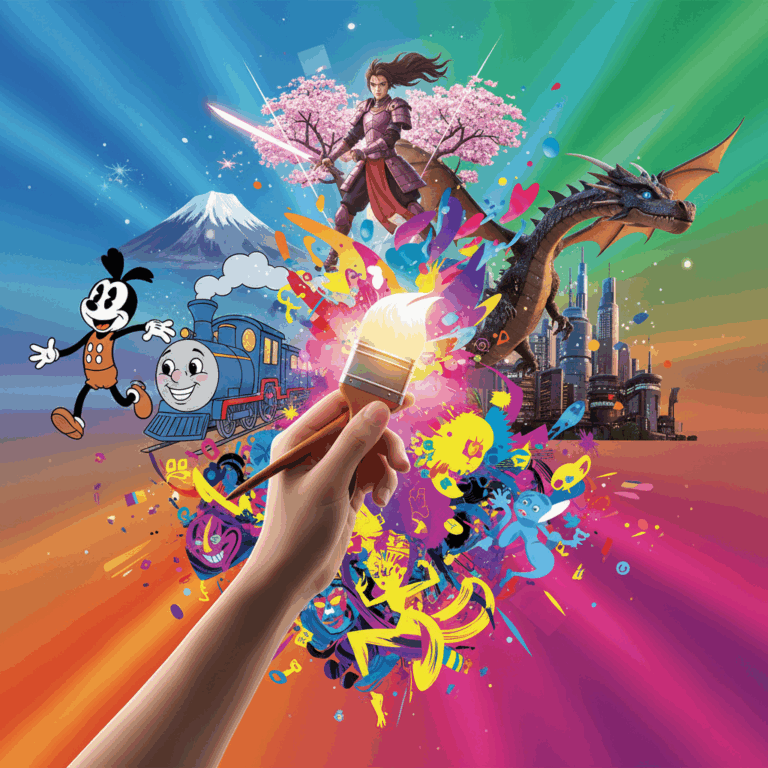
The cartoonish style it is based on exaggeration of traits to emphasize personality and create visual humor, widely used in iconic characters such as Mickey Mouse.
This technique allows the emotions and characteristics of the characters to be immediately recognizable, strengthening their identity and empathy with the viewer.
The exaggeration does not seek realism, but rather to convey a fun and expressive interpretation, highlighting unique aspects of each animated figure.
Minimalism: simple shapes and precise lines
The minimalism in animation he uses basic shapes and clean lines, reducing detail to focus attention on the essence of movement and composition.
This style challenges traditional conventions and opens up new creative possibilities, bringing a modern and elegant aesthetic to productions.
Visual simplicity does not limit expressiveness, but rather power, ensuring that each stroke has meaning and narrative force.
Traditional animation and its artisanal value
The traditional animation it is a manual art that involves drawing each painting by hand, preserving a nostalgic charm and a high level of artisanal detail.
This method keeps alive a deep connection with the history of animation and a passion for manual creation, valued for its authenticity and dedication.
Many studios continue to use this technique to convey unique warmth and personality that are not easily achieved with digital techniques.
3D animation: realism and three-dimensional complexity
The 3d animation add an extra dimension, creating worlds and characters with a realism and depth unprecedented in digital animation.
It allows for complex effects, natural movements and detailed textures, as seen in large productions such as Toy Story or Shrek.
Although it is not 2D, it complements and enriches the artistic panorama, opening new frontiers for visual narrative in animation.
Impact of artistic style on narrative
The artistic style it determines the way a story is perceived, making the narrative have a emotional impact deeper in the audience.
Each stylistic choice brings a unique voice to the work, creating a link between the character's identity and the viewer's experience.
Thus, art not only complements the story, but is also an essential element to communicate messages and emotions.
Influence on emotional connection and identity
The artistic style it directly influences how the audience connects emotionally with the characters and the plot, enhancing empathy.
For example, a cartoonish style can generate humor and quick sympathy, while a realistic approach delves into complex feelings and nuances.
The visual identity of animation is formed from this connection, making each work have a unique artistic signature that distinguishes it.
Exploration of genres and audiences through art
Art in animation allows diversify genres, adapting the style to the target audience, from children to adults, and from comedies to dramas.
The minimalist style can appeal to audiences who value elegance and simplicity, while realism can appeal to those seeking narrative depth.
This variety expands the reach of animation and allows creators to experiment with new ways of telling stories.
Innovation and expression in the art of animation
Animation is an art in constant change, where the innovation technological and creative drives the evolution of their styles and techniques.
Each advance in software or technique provides new tools for artists to express unique ideas and take narrative to another level.
This causes the animation to remain fresh and relevant, showing itself as a dynamic and continuously expanding medium.
Constant evolution of styles and techniques
The animation it has come a long way, from hand drawing to the integration of artificial intelligence, expanding visual possibilities.
The styles adapt to innovations and trends, mixing traditional techniques with digital ones to achieve more complex and expressive results.
This evolution represents a dialogue between the past and the future, respecting the artisanal essence and embracing modern technology.
Creativity and experimentation in contemporary works
The current works stand out for their creativity and artistic risks, exploring unconventional narratives and innovative designs.
Contemporary artists break with established rules, using varied resources and combining styles to generate impactful visual experiences.
This experimentation opens new aesthetic currents, enriching the art of animation and attracting diverse and global audiences.