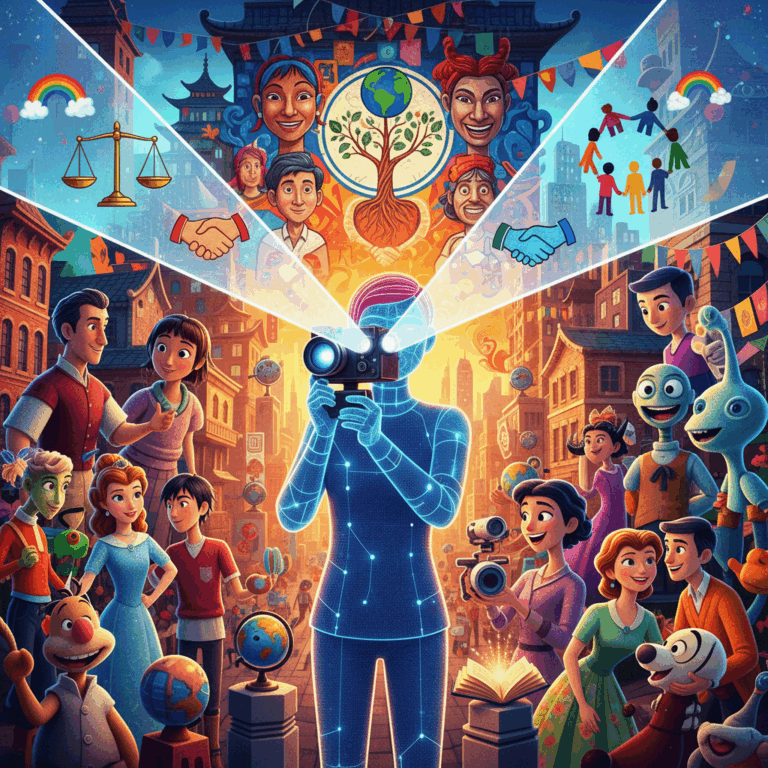
Social themes in animated films
Animated films not only entertain, but also address social issues relevant such as diversity, inclusion and social responsibility, inviting reflection.
This artistic form manages to convey fundamental values through stories that connect with audiences of all ages, promoting empathy and social awareness.
These messages enrich the culture, promoting a broader perspective on respect, equality and care for the environment in society.
Diversity and inclusion
Diversity and inclusion are central themes in many animated films, which show plural realities and promote respect for cultural and social differences.
Stories like those from Zootrópolis show how overcoming prejudices and stereotypes is essential to building just and egalitarian societies.
Through varied characters, these films highlight the importance of empathy and acceptance as tools for peaceful and enriching coexistence.
Social responsibility and environment
Animated films also address the need to take care of the planet and take on one social responsibility facing environmental problems.
Examples such as the Wall-E story raise awareness about pollution and excessive consumption, showing the urgency of protecting the Earth.
These stories invite us to reflect on the human impact and cultivate habits that promote sustainability and collective well-being.
Analysis of films with a social message
Animated films with social messages are powerful tools that address deep topics in an accessible way. Through their plots, they promote reflection in different generations.
This analysis highlights some films that explore prejudice, the environment, family and cultural identity, revealing how animation can influence the way we understand the world.
Zootropolis and criticism of prejudices
Zootropolis uses an animal world to examine prejudice and discrimination in human society. The film shows how stereotypes limit harmonious coexistence.
Through its diverse characters, the story teaches that empathy and cooperation are key to overcoming fear and mistrust between different groups.
The central message invites us to question prejudices and recognize the importance of inclusion to build fair and equitable communities.
Wall-E and environmental awareness
Wall-E presents a critique of unbridled consumerism and its consequences for the planet. The story of a lone robot reflects the urgency of caring for the environment.
The film highlights human responsibility and the need to change habits to preserve the Earth, promoting a commitment to sustainability.
This story raises awareness among viewers of all ages about the environmental impact and value of life on our planet.
Finding Nemo: family and acceptance
Finding Nemo highlights values such as family, perseverance and acceptance of differences. His story celebrates diversity within the family nucleus.
The coexistence between characters with unique characteristics reflects the richness that inclusion and respect for others brings, regardless of their origin or condition.
Thus, the film fosters a positive vision about diversity and the importance of supporting each other in the face of adversity.
Moana and Kirikú: identity and cultural tradition
Moana and Kirikú highlight the relevance of cultural identity and the connection with ancestral roots. Both works explore the link between people and their natural environment.
These films promote respect for traditions and recognition of diverse communities, highlighting fundamental cultural values.
They promote a deep understanding of one's own and others' cultures, strengthening the sense of belonging and intercultural respect.
Impact of animated films on society
Animated films with a social message have a profound impact on society, shaping thoughts and values in viewers of all ages.
Through accessible stories, these films promote empathy, respect and awareness of essential social and cultural issues.
Its influence transcends entertainment, being key tools to promote positive changes in social perception and behavior.
Influence on thinking and values
Animated films transmit values such as inclusion, respect and social responsibility, affecting the way people understand and live together.
Often, these stories awaken reflection on prejudices and social problems, inviting us to question and transform deep-rooted attitudes.
By addressing complex issues in a simple way, they manage to impact both children and adults, promoting a more conscious and fair society.
In this way, animation becomes a powerful medium that contributes to the ethical and cultural formation of its audience.
Animation as an educational tool
The animation it is an effective means of transmitting educational messages that impact both children and adults, facilitating the understanding of complex social issues.
Thanks to their visual and narrative language, these films promote learning and reflection on values such as empathy, inclusion and cultural respect.
Messages for children and adult audiences
Animated films contain messages tailored for different ages, allowing children to understand basic concepts while adults capture deeper nuances.
This enriches the audience's experience, generating intergenerational dialogues on relevant social problems from an accessible and entertaining perspective.
In this way, animation contributes to emotional and social education, strengthening the construction of a more conscious and supportive society.
Promotion of social and cultural reflection
These works stimulate critical reflection on topics such as inequality, the environment and cultural identity, helping to question prejudices and stereotypes.
Through symbolic stories and characters who face real conflicts, animation promotes respect for diversity and appreciation of traditions.
This approach encourages more inclusive and tolerant thinking, being a valuable tool for cultural and social education in different contexts.