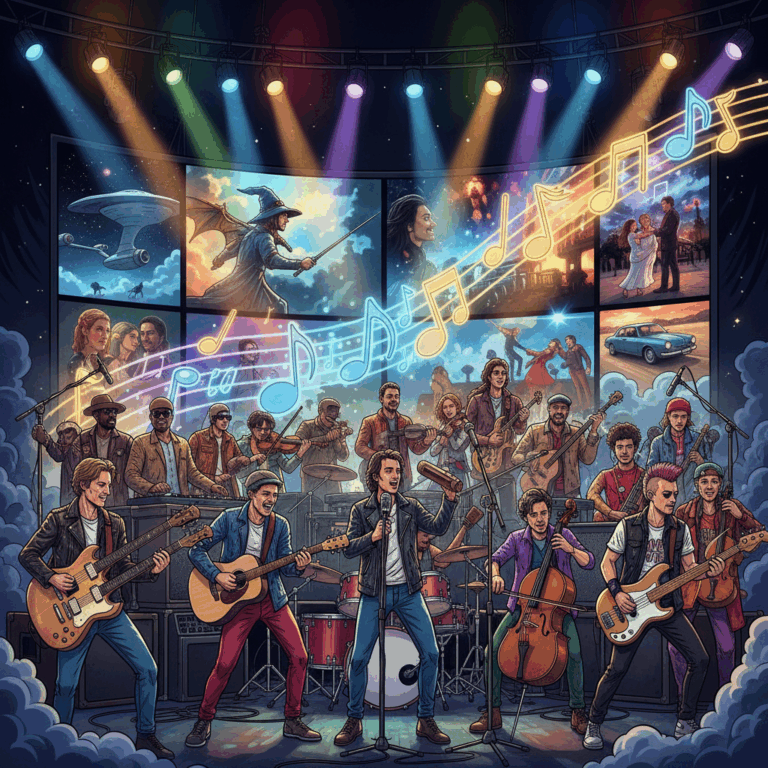
Iconic musical groups on soundtracks
Numerous musical groups have left an indelible mark on the history of cinema with their songs, which have become timeless classics. These themes have managed to define unique generations and styles in soundtracks.
Among these icons, the Bee Gees and Queen stand out for their profound impact on films that transformed not only music, but also popular culture linked to cinema. His songs continue to be essential references.
Their music not only accompanies scenes, but also creates unforgettable atmospheres that elevate the narrative and emotion in each film where they appear, consolidating their legacy in the audiovisual industry.
Bee Gees and its impact on Saturday Night Fever
The Bee Gees were essential to the soundtrack of Saturday night fever, providing hits that marked the seventies. His song Stayin' Alive it became a cultural symbol.
This success not only animated the film, but also represented the spirit of an entire era, with its disco and energizing beat still being recognized worldwide.
Their music helped define the genre and aesthetics of both the film and the era, positioning them as key protagonists in the history of musical cinema.
Queen and the connection with Bohemian Rhapsody
Queen achieved a memorable connection with cinema thanks to the inclusion of Bohemian Rhapsody in Wayne's World, which revitalized its popularity and its impact on pop culture.
Later, the biographical film Bohemian Rhapsody he brought his music to new audiences, showing his legacy and the importance of his work in the cinematographic context.
The narrative of Queen's music, with its unique combination of rock and theatricality, has been instrumental in creating iconic and profound moments on the big screen.
Featured groups and their songs for movies
Numerous groups have contributed iconic songs that defined films and left lasting marks. Its themes are uniquely integrated into cinema, creating unforgettable atmospheres.
These artists transformed their pieces into true cultural symbols, making the songs transcend their original function to become an essential part of the cinematographic experience.
In this context, Blondie, Duran Duran and The Beatles stand out for their specific and influential contributions to soundtracks and films, showing musical diversity in the seventh art.
Blondie and the song Call Me on American Gigolo
Blondie achieved great notoriety when creating ÎCall Me find, main theme of the film American Gigolo (1980). This song synthesizes the new wave and rock style of the time.
Its energetic rhythm and suggestive lyrics fit perfectly into the atmosphere of the film, consolidating Blondie as pioneers in fusing pop music with contemporary cinema.
encialCall Me sufre was not only a commercial success, but also reinforced the visual and thematic identity of the film, contributing to its recognition and cultural validity decades later.
Duran Duran and A View to a Kill in James Bond
Duran Duran participated in the saga James Bond with the theme ÚNA View to a Kill ar, official song from the 1985 film of the same name. This contribution consolidated them on the international scene.
The song combines synthesizers and rock, encapsulating Bond's sophisticated and modern style in the eighties, and generating an immediate impact on both film and music fans.
Their collaboration showed how a band could bring a fresh and relevant sound to an iconic franchise, paving the way for future alliances between film and pop music.
The Beatles and their influence on musical films
The Beatles stood out for integrating their music into films such as To Hard Day's Night and Help!, who organized their songs into creative and fun narratives.
These films revolutionized the musical format, mixing comedy and music to create new forms of audiovisual entertainment linked to pop culture.
His influence was not only musical, but also aesthetic and cultural, setting precedents for future musical films that combine history and song with great success.
Rock groups in the cinema
Rock has been fundamental in creating unique atmospheres in cinema, bringing energy and depth to iconic scenes. Legendary bands like Led Zeppelin and Pink Floyd have left an indelible mark.
His music not only accompanies the narrative, but also becomes an element that defines the identity of the films, making his songs transcend time and the audiovisual format.
These groups not only influence the music, but also enrich the viewer's experience, transforming simple scenes into unforgettable moments thanks to the power of rock.
Led Zeppelin and Pink Floyd on memorable soundtracks
Led Zeppelin contributed themes full of strength and mysticism in films such as The Song Remains the Same, who mix their music with striking images and a dramatic atmosphere.
On the other hand, Pink Floyd has been a key player in films, especially with their album The Wall, which was converted into an experimental and symbolic film that reflects the essence of the group.
Pink Floyd's psychedelia and progressive rock offer a sensory journey that fits perfectly into deep, emotional visual narratives, intensifying the impact of the films.
Both groups demonstrated that their music could be much more than simple accompaniment: they became essential protagonists of cinematographic language.
The legacy and importance of music in cinema
Music in cinema transcends its original function, becoming an essential element that endures beyond the film itself. Iconic songs elevate the viewer's experience and enrich the visual narrative.
These themes are transformed into cultural symbols that keep alive the memory of different eras and cinematographic styles, consolidating a lasting link between music and cinema.
Collaboration between musical groups and films creates an artistic legacy that influences future generations, demonstrating the unifying power of music within the seventh art.
The significance of songs beyond movies
Many songs created for cinema manage to surpass the framework of the film and become world-renowned anthems. This phenomenon demonstrates music's ability to connect with diverse audiences.
For example, songs like ésStayin' Alive from Bee Gees or ésCall Me from Blondie surpassed their initial role and continue to be musical references, highlighting their influence on popular culture.
Transcendence occurs when these pieces are reinterpreted, used in new contexts or evoke emotions that go beyond the film, thus creating a profound cultural impact.
The role of music in cinematographic identity
Music is key to shaping the identity of a film, providing tone, atmosphere and emotion that complement the visual narrative and increase its emotional resonance.
Soundtracks and songs help define genres, eras and characters, connecting with audiences on a deeper level and making certain films unforgettable.
Fun fact about music and cinema
Studies show that the proper use of music in cinema improves the viewer's memory of the story and increases empathy towards the characters.
This explains why many films maintain a strong fan base thanks to their soundtracks, which reinforce the experience and prolong its cultural relevance.