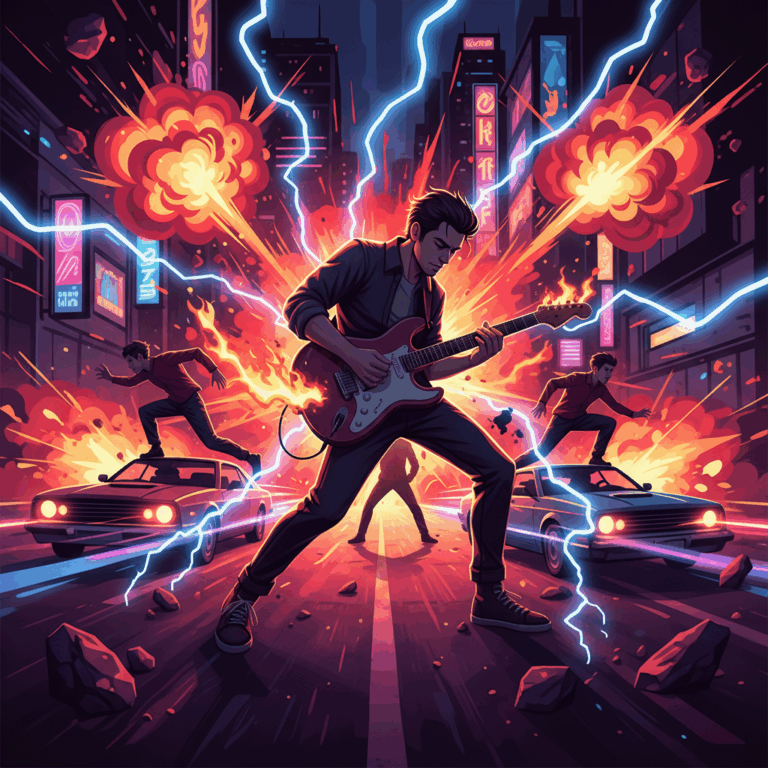
Characteristics of action music
Action music is distinguished by its ability to transform ordinary scenes into moments charged with energy and tension. Its rhythmic structure is key to maintaining the viewer's attention.
This type of music uses sound elements that generate an intense atmosphere, preparing the audience for what is to come in the narrative. Its design is designed to amplify the emotions present in each scene.
Rhythmic and percussive elements
Fast rhythms and powerful percussion are distinctive signs in action music. These elements mark the pulse of chase or combat scenes, creating a sense of constant urgency.
Synthesized bass and marked drums intensify the sound experience, promoting a physiological response in the receiver that translates into greater adrenaline and concentration.
Rhythmic repetition and dynamic patterns keep energy elevated, synchronizing music with the visual rhythm of the on-screen action to maximize emotional impact.
Musical genres and combinations
Action music fuses genres such as epic rock, dubstep and orchestral music, combining classical instruments with modern technology to create unique atmospheres.
This mix allows the music to evoke feelings of chaos and tension suitable for chases, conflicts or unexpected discoveries during the plot.
The use of synthesizers with the orchestra provides sound textures that vary between organic and electronic, facilitating a versatile and powerful listening experience.
Emotional and physiological effects
Action music not only drives the visual narrative, but also triggers physical responses in the body. Its energy activates the release of adrenaline, vital for intense and exciting scenes.
This phenomenon generates a direct connection between what is seen and what is felt, amplifying the viewer's emotions and maintaining their focus at each crucial moment in the story.
Furthermore, its influence goes beyond simple accompaniment, acting as a stimulus that transforms perception and emotional experience during action.
Adrenaline generation
Action music produces an immediate physiological response in the listener by stimulating the generation of adrenaline, preparing them to face situations of tension or danger.
This hormonal increase intensifies risk perception and speed, making combat or chase scenes feel more real and exciting to audiences.
Thus, adrenaline acts as a natural mechanism that amplifies immersion, aligning body and mind with the intensity of music and image.
Amplification of emotional experience
Beyond the physical effect, action music amplifies the emotions present in each scene, enhancing feelings such as fear, urgency or courage.
Through increasing sound combinations and dynamics, this music makes the viewer feel each turn of the plot in greater depth and connect emotionally with the characters.
This amplification makes the sequences memorable, raising emotional impact and audience satisfaction during key moments.
Impact on the viewer's attention
Action music directs and sustains the viewer's attention through intense rhythms and strategic auditory changes that maintain constant interest.
By synchronizing with visual dynamics, it reinforces concentration and prevents the mind from wandering, ensuring that every detail of the scene is perceived and valued.
This auditory approach contributes to a more immersive and exciting experience, making the action the absolute center of the narrative.
Importance in cinema and pop culture
Action music becomes a narrative force that drives stories in film and pop culture, giving scenes dynamism and emotional depth. Its presence is essential to maximize tension and visual impact.
In addition to accompanying, the music acts as another character that influences the viewer's perception, establishing rhythms and moods that guide the sensory and emotional experience during the development of the plot.
Music as a narrative character
Action music not only complements the images; It also tells a parallel story that enriches the visual narrative. It becomes an active element that directs emotions and anticipates events.
With its variations in rhythm and tonality, the music accompanies the characters in their conflicts, reinforces key moments and adds layers of meaning that transform the viewer's experience.
This approach turns the soundtrack into a narrative ally, essential for exploring the motivations and internal tensions that images alone fail to fully express.
Examples in franchises and movies
Large franchises such as emiaMission Impossible have used action music to create unique atmospheres that become icons within cinema, with themes that immediately evoke feelings of urgency and adventure.
Films like igGuardians of the Galaxy stand out for their soundtrack, which mixes action and nostalgia, demonstrating how music can elevate and define the identity of a production and its cultural reception.
These examples reflect how action music transcends the sound background, becoming an integral part of the appeal and commercial success of many popular productions.
Iconic applications and examples
Classic action songs have transcended cinema to become universal symbols of motivation and energy. Its relevance remains alive thanks to its constant use in different media.
These compositions not only elevate scenes in films, but have also found a special place in sporting events and video games, reinforcing the feeling of adrenaline and challenge.
Classic songs and their relevance
Survivor's ÎEye of the Tiger fan is an anthem that represents improvement and strength, adopted in numerous films and sports competitions for its contagious energy.
Other songs, like AC/DC's àthunderstruck, have recognizable riffs that instantly motivate and prepare audiences for intense moments of action or competition.
These classic themes remain valid thanks to the ability to awaken powerful emotions that connect the listener with the experience of action and extreme effort.
Use in digital entertainment and sports
In the digital world, action music enhances the video game experience, creating immersive atmospheres that happen during combat or important missions.
Additionally, at sporting events, these songs are used to encourage the audience and raise the energy of athletes, making each encounter more exciting and memorable.
Curiosity about musical integration
Many video games choose to produce original soundtracks with action music influences to perfectly synchronize the music with the dynamics of the game.
This integration improves the player's emotional response, making each moment of tension intensify thanks to the accompanying musical force.