Common reasons for series cancellations
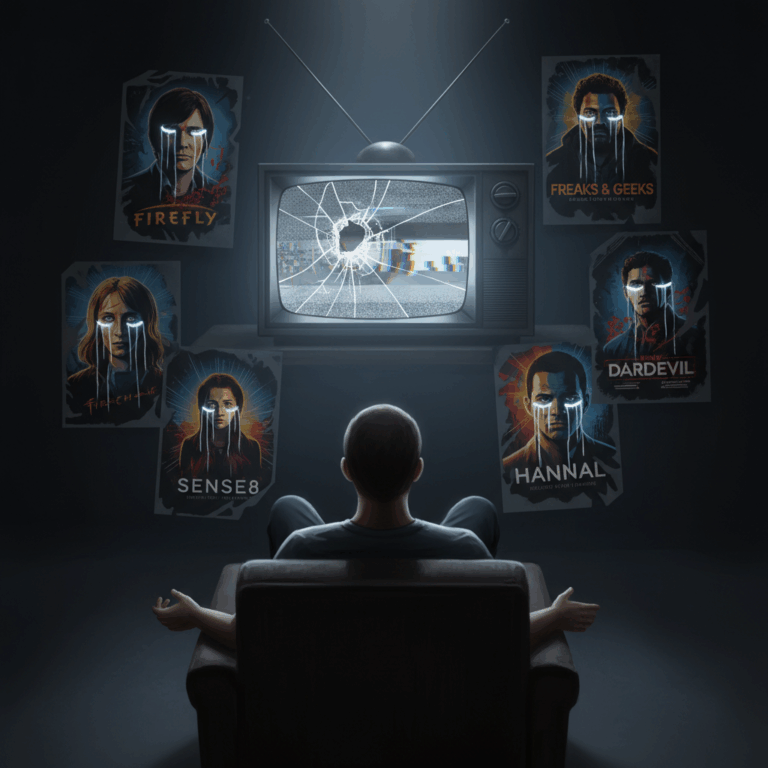
Television series face multiple challenges that can lead to their cancellation, even when they have high artistic value. Understanding these reasons helps to understand the phenomenon.
Generally, the industry prioritizes financial and strategic aspects over quality or narrative potential, causing decisions that are sometimes unfair for productions and their followers.
Economic and strategic factors
One of the main reasons for canceling a series is the low audience rating, which directly impacts profitability for the channels or platforms.
The high production cost also influences, since productions with high expenses require rapid success to justify their investment.
Additionally, scheduling errors or lack of promotion can prevent a series from reaching its audience, affecting its numbers and condemning it to cancellation.
Impact on public perception and criticism
Public perception and criticism often do not coincide with business decisions, since a series can have a loyal fan base and good artistic appreciation.
When a series is canceled prematurely, frustration and a sense of loss are generated among its followers, who believe that the story had a lot to explore.
Additionally, these cancellations affect public confidence in the continuity of quality projects, creating a long-term negative impact on the audience.
Emblematic series canceled prematurely
Several iconic series have been canceled prematurely, leaving fans wanting more. These productions stood out for their quality and originality, but did not survive financial decisions.
The legacy of these series endures due to their cultural impact and connection with their audience, even after their abrupt end. Below, we review some examples that illustrate this unfair situation.
Firefly: combination of science fiction and western
Firefly, created by Joss Whedon in 2002, merged science fiction with western, featuring a unique universe and memorable characters. However, it only had 14 episodes before being cancelled.
Poor programming and little promotion were key in the initial failure, but the series gained cult following its cancellation, establishing itself as an unfairly interrupted classic.
Despite a later film that closed some arcs, many fans still believe that Firefly's story deserved more seasons to fully develop.
Freaks and Geeks: honest portrait of youth
Freaks and Geeks was a comedy-drama about misfit teenagers in the '80s, with a candid portrayal of youth and bullying. It was highly acclaimed, but canceled after one season.
The series featured an emerging cast, including figures such as James Franco and Seth Rogen, and received praise for its honest and human script, winning an Emmy in its short life.
For fans, the cancellation was premature; the series was barely exploring its stories, generating frustration and a fan base that remembers it fondly.
Sense8: international commitment and identity issues
Sense8, the brainchild of sisters Wachowski and J. Michael Straczynski, fused action, science fiction and cultural diversity into one global plot. It was an ambitious and visually diverse adventure.
The series faced a high budget and complex logistics, which led to its cancellation after only two seasons, despite having strong support from its international audience.
Netflix produced a special to close stories, but many fans feel that Sense8 barely touched its potential, leaving it unfinished and with a large base of disillusioned followers.
Terriers and American Vandal: critical quality without an audience
Terriers was a mix of drama and detective comedy highly valued for its script and the chemistry between the protagonists, but it failed to attract enough audiences to continue.
American Vandal, a satirical mockumentary about school crimes, received praise for its wit and style, but was canceled after two seasons, despite its unanimously recognized quality.
Both series show the unfair side of cancellation: quality productions that did not achieve the necessary visibility and remained unfinished, leaving their audience wanting more.
Consequences of the unexpected end of the series
The abrupt closure of a series creates a significant impact on its cultural legacy, limiting the scope and influence it may have had in the long term.
Additionally, it disrupts narrative development, leaving open plots and characters without evolution, which disappoints the audience and reduces the final artistic value.
Cultural legacy and limited story development
Premature cancellations prevent promising series from consolidating their place in popular culture and fully developing their plots and universes.
This causes the public to only know part of the creative potential and deep themes remain without sufficient exploration, affecting their social impact.
For example, Firefly and Sense8 left their fans feeling that their stories could have changed television if they had continued.
The lack of closure also affects the long-term recognition of actors, screenwriters and creators involved, which may limit future opportunities.
Response and actions of the follower base
Faced with these cancellations, fans usually mobilize with campaigns to revive the series or achieve productions that close the story, showing their commitment to the work.
Social networks, petitions and events are used as tools to pressure platforms or networks to reconsider their decisions.
In some cases, such as with Sense8, the pressure achieved a special end, demonstrating that active support can mitigate frustration and preserve legacy.
Reflection on television and cancellations
Television has shown a worrying pattern by wasting creative potential due to commercial decisions. Premature cancellations deprive the public of complete and enriching stories.
This phenomenon reflects a tension between the economic profitability and artistic value, where financial interest often predominates over narrative development.
Wasted potential in the television industry
The early closure of notable series shows how the industry can lose projects with great cultural and artistic impact due to strictly commercial criteria or insufficient ratings.
Many canceled series had characters and plots that could have evolved significantly, allowing for stronger contributions to the medium and society.
This loss also affects creators and actors, who are limited in their professional growth and the possibility of delving deeper into their stories.
Importance of reconsidering continuity criteria
It is essential that the television industry explores new forms of evaluation, less dependent on the immediate audience, to assess the long-term potential of the productions.
Platforms and chains could foster the continuity of projects that bring diversity, innovation and quality, even if their initial success is not massive.
Encouraging patience and responsible investment can generate a richer television ecosystem, favoring series that set trends and cultivate loyal audiences.